
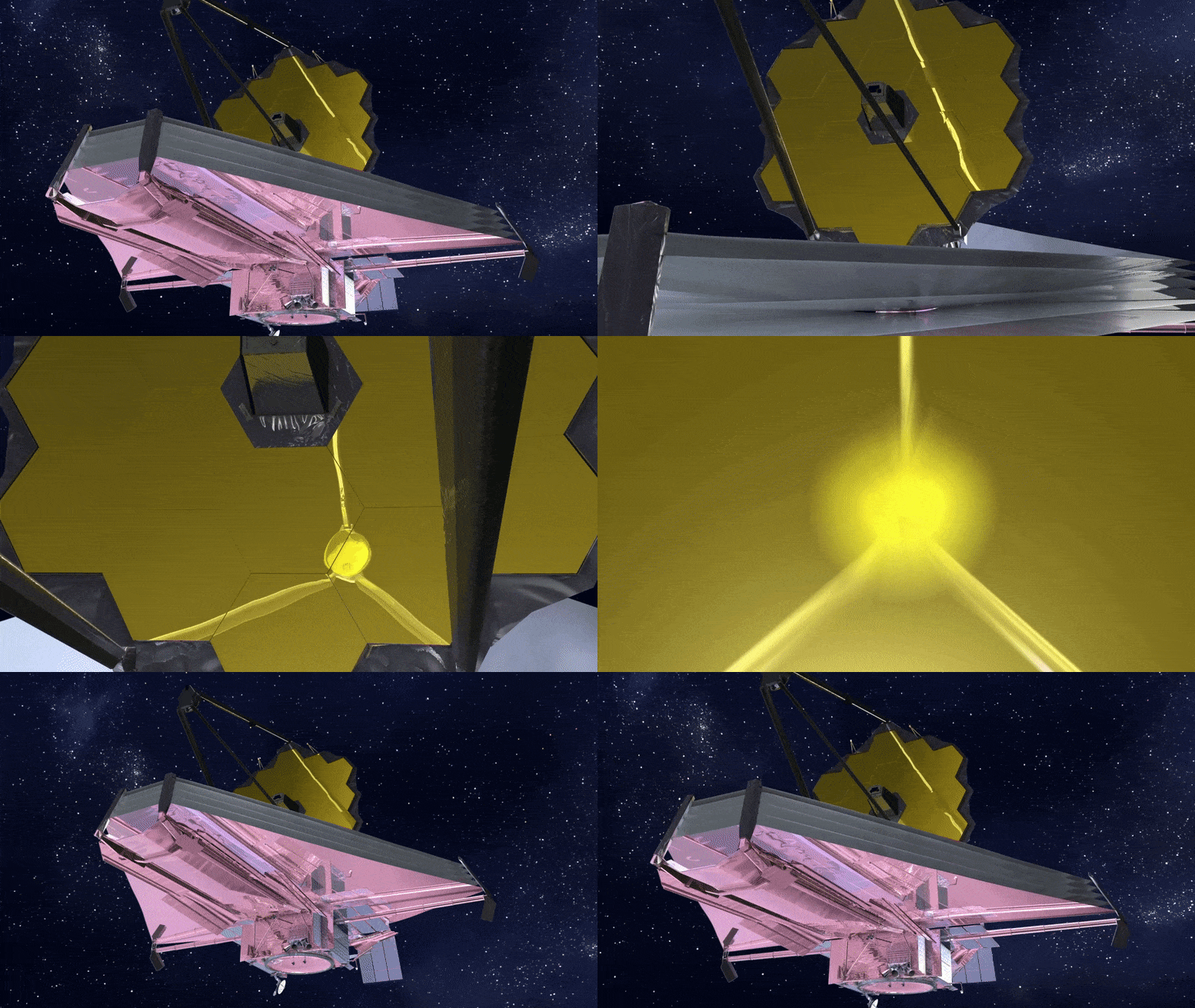
Telescopio espacial James Webb de la NASA. Crédito: Centro de Vuelo Espacial Goddard de la NASA y Northrop Grumman
Sexta etapa de alineación[{” attribute=””>NASA’s James Webb Space Telescope’s mirrors to its scientific instruments so they will create the most accurate and focused images possible has concluded. While the Mid-Infrared Instrument (MIRI) continues its cooldown, optics teams have successfully aligned the rest of the observatory’s onboard instruments to Webb’s mirrors. Previous alignment efforts were so accurate that the team concluded no additional adjustments to the secondary mirror are necessary until the seventh and final stage, which will involve MIRI when it has fully cooled.
“As a general rule, the commissioning process starts with coarse corrections and then moves into fine corrections. The early secondary mirror coarse corrections, however, were so successful that the fine corrections in the first iteration of Phase Six were unnecessary,” said Chanda Walker, Webb wavefront sensing and control scientist, Ball Aerospace. “This accomplishment was due to many years of planning and great teamwork among the wavefront sensing team.”
Throughout the majority of the alignment process, Webb’s 18 hexagonal mirrors and secondary mirror were focused into alignment to the Near-Infrared Camera (NIRCam) instrument only. Upon completing this most recent step, the observatory is now aligned to the Fine Guidance Sensor (FGS), the Near-Infrared Slitless Spectrograph (NIRISS), and the Near-Infrared Spectrometer (NIRSpec) as well as NIRCam.
Once MIRI fully cools to its cryogenic operating temperature in the weeks ahead, a second multi-instrument alignment will occur to make final adjustments to the instruments and mirrors if needed. When the telescope is fully aligned and able to deliver focused light to each instrument, a key decision meeting will occur to confirm the end of aligning the James Webb Space Telescope. The team will then transition from alignment efforts to commissioning each instrument for scientific operations, which are expected to begin this summer.

Mariana Vargas es colaboradora de ONU Noticias MX, donde informa sobre temas de actualidad, política, negocios, tecnología, deportes, entretenimiento y estilo de vida. Su trabajo se centra en ofrecer contenido claro, útil y relevante, acercando a los lectores las noticias y tendencias que influyen en la sociedad y el día a día.




Más historias
Dos asteroides similares al meteorito de Cheliábinsk pasarán cerca de la Tierra
Compensar el sueño los fines de semana puede reducir el riesgo de enfermedad cardíaca en una quinta parte: estudio | Cardiopatía
¿Cómo se hicieron los agujeros negros tan grandes y rápidos? La respuesta está en la oscuridad.